Surfaces That Look Painted, Not Faded
Oxidation Removal in Grand Rapids for chalky, faded exterior surfaces that pressure washing alone cannot restore
West Michigan's UV exposure and humidity cause aluminum, vinyl, and painted exterior surfaces to develop a chalky oxidation layer that dulls color and accelerates material breakdown over time. This oxidation is a chemical change in the surface coating—not dirt—which means pressure washing alone spreads the chalk residue rather than removing it, and the surface remains dull even after aggressive rinsing. Spotless Property Wash uses chemical emulsification to dissolve the oxidized layer at the molecular level before any water touches the surface, which lifts the chalk completely and reveals the original color and sheen underneath. Properties in East Grand Rapids and Ada with older siding, painted trim, and aluminum accents benefit most from this process because their exposure to sun and seasonal moisture compounds oxidation annually.
The emulsification approach works by applying a pH-balanced solution that reacts with the oxidized material, breaking it down into a suspension that rinses away cleanly without abrading the underlying surface. Pressure-only services skip this chemistry step entirely, which forces them to use higher water pressure to compensate—an approach that either fails to remove the bonding chalk layer or damages the paint and substrate trying to blast it off.
Request a surface evaluation to determine the extent of oxidation and confirm which areas require chemical treatment versus standard cleaning.
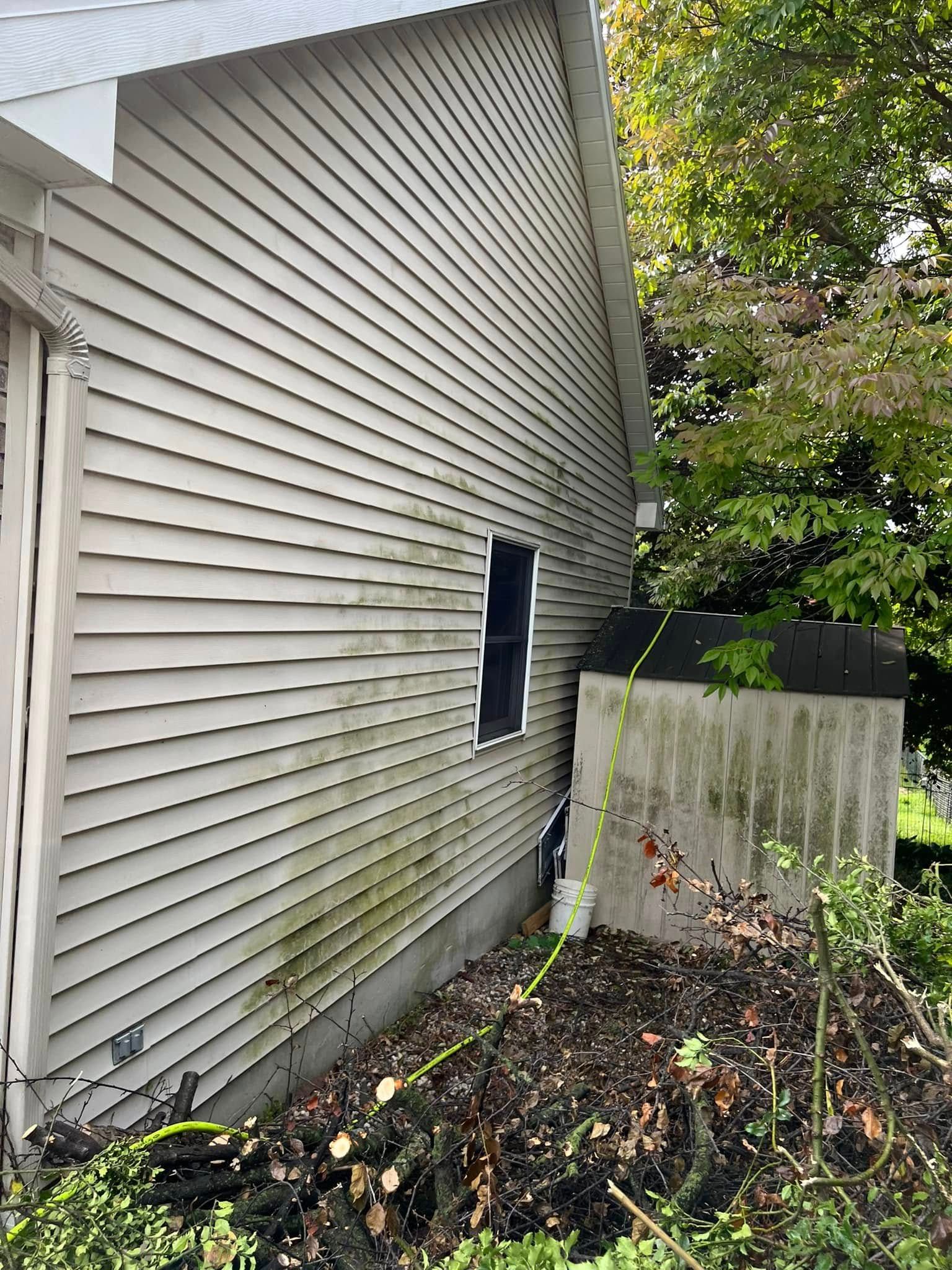
Before
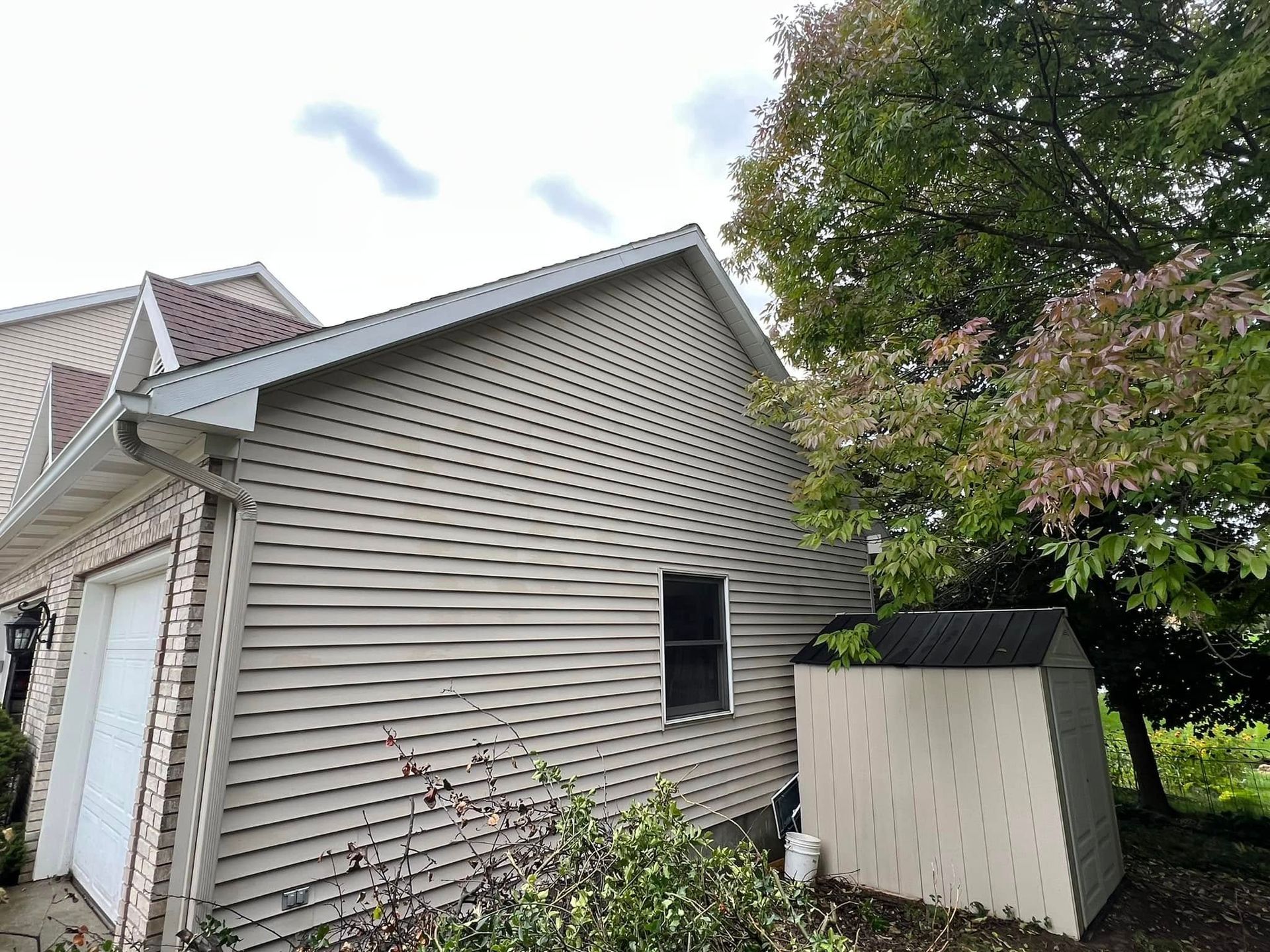
After
How Emulsification Reverses Surface Aging
The treatment process involves pre-wetting the surface to open the substrate, applying the emulsifying agent in controlled sections to prevent premature drying, and allowing dwell time for the chemical reaction to complete before rinsing with low-pressure water. Different surface materials require adjusted dwell times and solution concentrations—aluminum oxidation releases faster than oxidized paint, and vinyl requires gentler chemistry to avoid affecting the plasticizer additives that keep the material flexible.
After treatment, your siding and trim return to a uniform color without streaking or fading, and the surface feels smooth rather than chalky when you run your hand across it. The restoration is immediate and visible—neighbors often ask if you repainted. Areas that previously left white residue on your hands or clothing after contact no longer transfer chalk, and rain no longer creates streaks down the siding as oxidized particles wash away unevenly.
Oxidation removal does not repair physical damage such as cracking, peeling, or substrate rot—it restores the appearance and integrity of surfaces where the coating itself has degraded chemically but remains structurally intact. Surfaces with active paint failure or deep weathering may require repainting after cleaning, and applying a protective sealant or wax following oxidation removal extends the restored appearance and slows future oxidation.
Common Questions About Surface Restoration
Homeowners across West Michigan want to understand whether oxidation removal is a permanent fix, how it differs from repainting, and what surfaces can be treated safely before scheduling the service.
What types of surfaces can be treated for oxidation?
Painted wood, aluminum siding and trim, vinyl siding, metal gutters, and most factory-finished exterior panels respond well to emulsification treatment—bare wood and raw metal require different restoration methods.
How long does the restoration last before oxidation returns?
Oxidation is an ongoing process driven by UV exposure and moisture, so treated surfaces will eventually re-oxidize over several years—applying a protective coating after treatment significantly extends the restored appearance and reduces the rate of future degradation.
Will this service remove all discoloration and staining?
Oxidation removal addresses chalky UV degradation specifically—it does not remove biological staining, rust bleed, or discoloration caused by environmental pollutants, which require separate treatment methods.
Is oxidation removal safer than repainting?
It is a less invasive option for surfaces where the coating has dulled but not failed—repainting requires surface prep, priming, and multiple coats, while emulsification restores the existing finish in a single service if the paint remains adhered.
Can oxidation removal be done during cool or damp weather?
Treatment works best in dry conditions above 50 degrees because the emulsifying agent requires time to react before rinsing, and cold or wet surfaces dilute the solution and reduce effectiveness.
Spotless Property Wash has restored exterior surfaces across West Michigan's residential properties with fully insured, detail-focused service. Schedule a consultation to review your siding and trim condition and determine whether emulsification treatment or another approach fits your restoration goals.